Trap Botox Before and After: Real Results and Transformations
See real trap Botox before and after results. Learn what to expect from trapezius injections, timeline, costs, and how to achieve the best transformation.

The photos tell a story that words struggle to capture. A woman stands in front of a mirror, shoulders sloped and heavy, neck disappearing into thick trapezius muscles. Three weeks later, same mirror, same woman. But everything has changed. Her neck looks longer. Her shoulders curve gracefully downward. The entire silhouette has transformed.
This is trap Botox. And these before and after results are why thousands of people are seeking out this treatment every month.
Maybe you've scrolled through social media and seen those dramatic comparison photos. Maybe you've wondered if the results are real, or just clever photography angles. Or perhaps you're already considering treatment and want to know exactly what kind of transformation is realistic for your body type.
This guide breaks down everything about trap Botox before and after results. You'll see what genuine transformations look like, understand the timeline of changes, learn how many units of trapezius Botox create visible results, and discover what separates stunning outcomes from disappointing ones. Whether you're researching your first treatment or comparing your results to others, you'll find honest, detailed information backed by real patient experiences.
What trap Botox actually does to your body
Before we look at before and after photos, you need to understand what's happening beneath the skin. Trapezius Botox works differently than facial treatments, and understanding the mechanism helps you set realistic expectations.
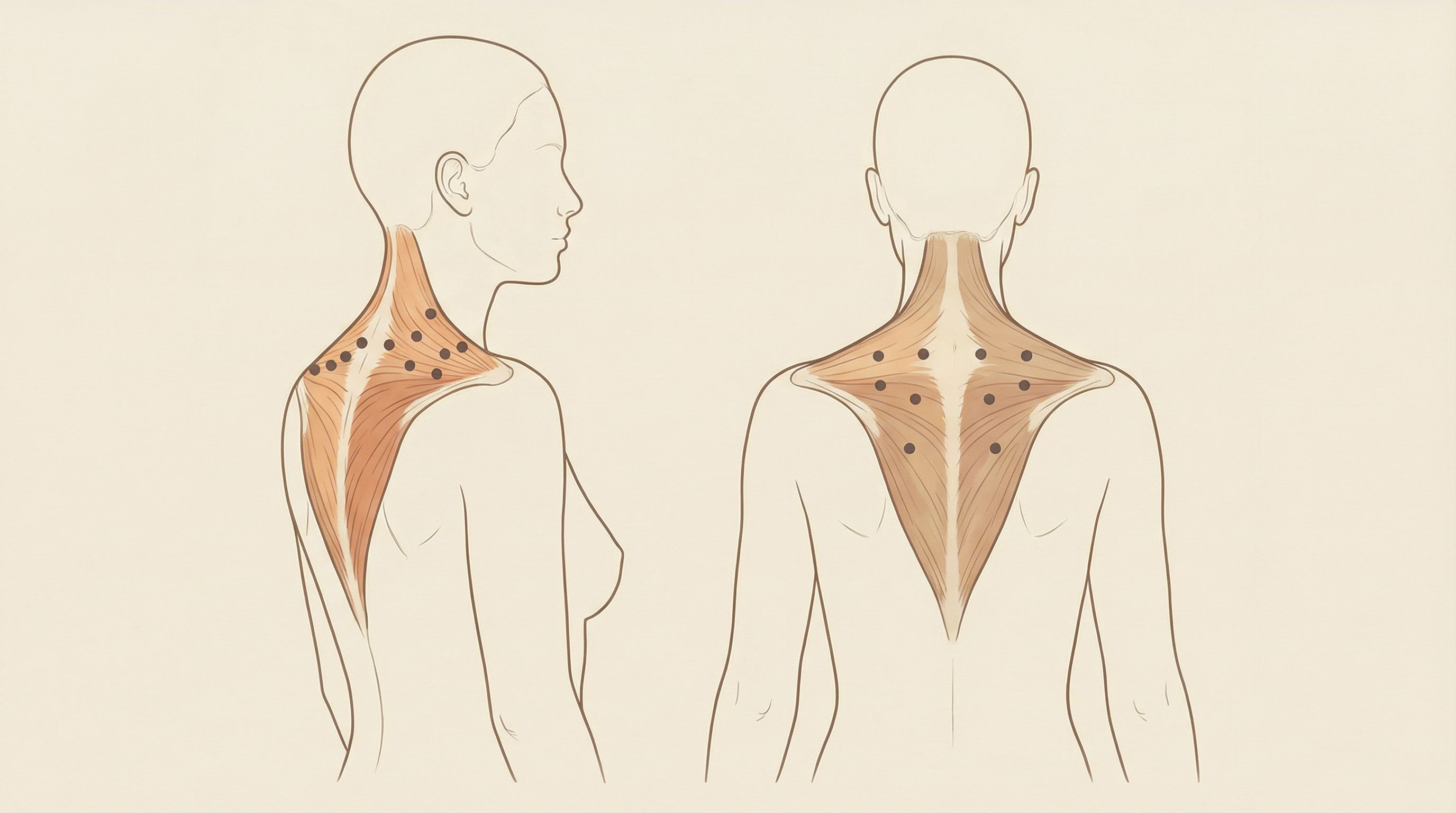
The trapezius muscle is one of the largest muscles in your upper body. It spans from your skull, across your shoulders, and down to the middle of your back. When this muscle is overdeveloped, which happens through stress, posture habits, or genetics, it creates that thick, muscular appearance between your neck and shoulders.
Botox doesn't remove muscle tissue. It relaxes it.
When injected into the trapezius, the neurotoxin blocks signals between nerves and muscle fibers. The muscle can't contract as forcefully. Over weeks, this reduced activity causes the muscle to shrink, a process called atrophy. Think of it like what happens when you stop going to the gym. The muscle gradually becomes smaller because it's not being used.
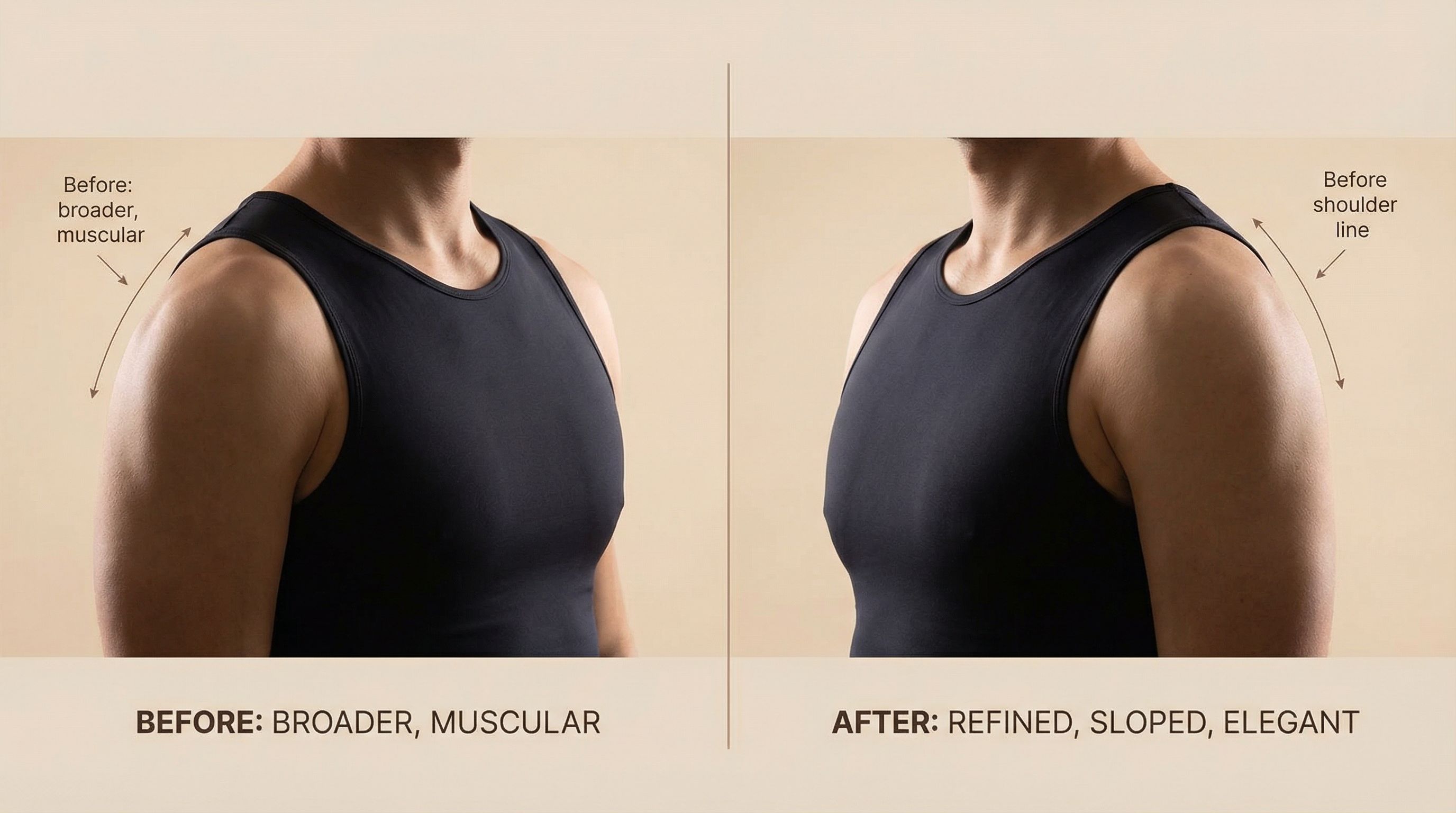
This shrinking creates the visual transformation you see in before and after photos. The neck appears longer because the muscle bulk at the base has decreased. The shoulder line slopes more gently. The overall silhouette becomes more refined.
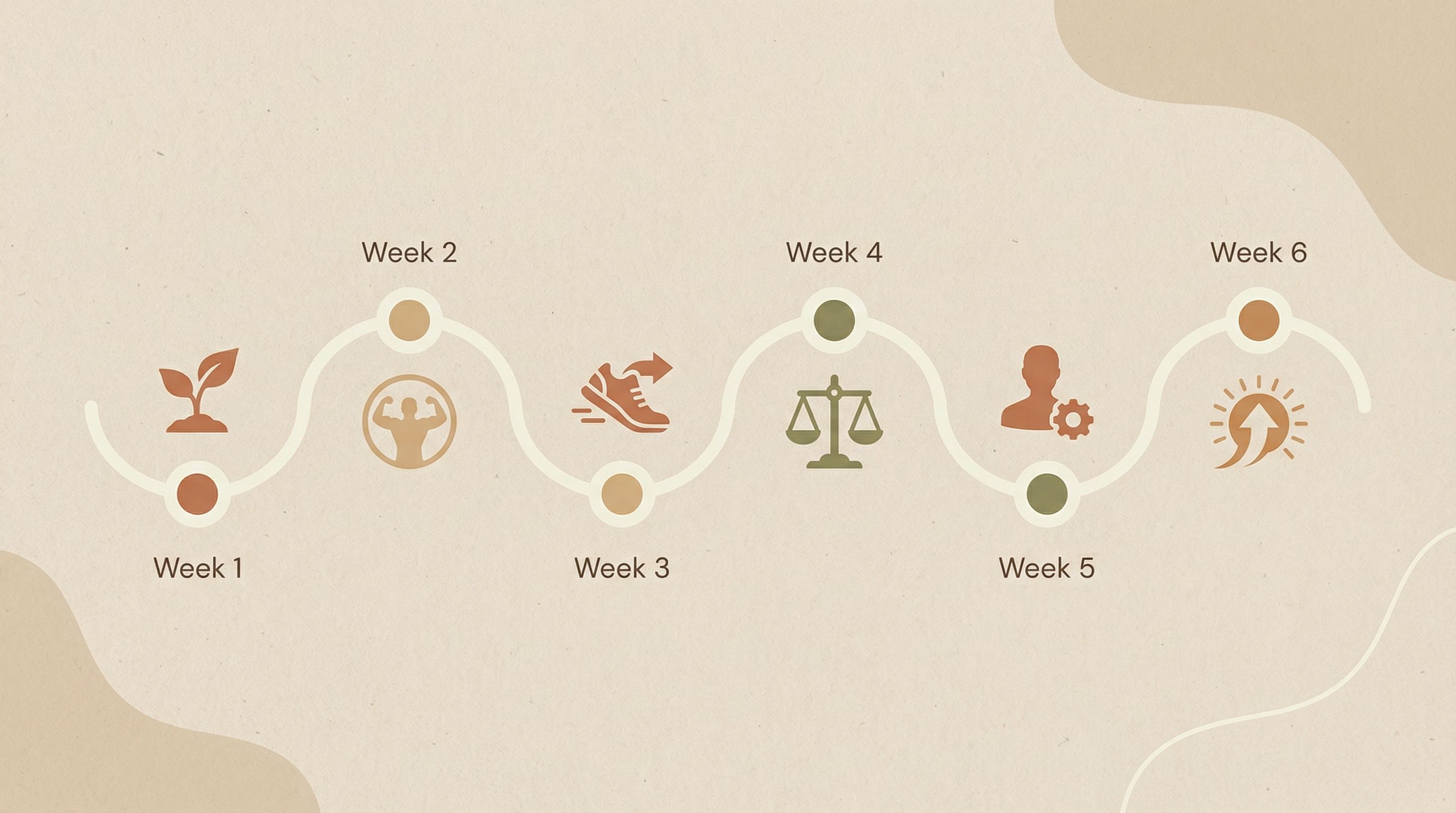
But here's what many people don't realize. The results you see at one week differ dramatically from results at six weeks. And results at three months can look different again. Understanding the Botox results timeline helps you evaluate before and after photos accurately.
The realistic timeline of trap Botox results
Most before and after comparisons don't tell you when the photos were taken. This matters enormously.
Days one through seven
You won't see much change during the first week. Some patients report feeling slight relaxation in the muscle, almost like the tension has released. But visually, your shoulders look essentially the same.
This can be discouraging if you're expecting immediate results. Don't worry. The treatment is working. The neurotoxin needs time to fully bind to nerve endings and block those signals.
Weeks two and three
Now things start happening. The muscle relaxation becomes more pronounced. Many patients notice their shoulders feel different when they try to shrug. The motion feels weaker, less forceful.
Visually, you might see subtle changes. The trapezius muscle starts to look slightly less bulky. Clothes might fit a bit differently around the neckline. These changes are often more noticeable to you than to others because you're watching closely.
Weeks four through six
This is when the real transformation appears. The muscle has been relaxed long enough that atrophy kicks in. The bulk starts melting away visibly.
Most before and after photos are taken around this point for good reason. The contrast between pre-treatment and six weeks post-treatment shows the most dramatic difference. Your neck appears noticeably longer. The shoulder slope has changed. The silhouette looks more refined and elegant.
Months two and three
Results continue maturing. Some patients see even more definition as the muscle continues to slim down. Others hit their peak around week six and maintain from there.
The duration of your results depends on factors like your metabolism, activity level, and how much muscle mass you started with. Most people enjoy their results for three to four months before considering maintenance treatment.
The maintenance phase
After the initial transformation, subsequent treatments often require fewer units. The muscle has already atrophied, so you're maintaining results rather than creating them from scratch. Many patients find they can extend time between appointments as their muscle adapts to its new, smaller size.
What real before and after results look like
Let's get specific about the visual changes you can expect. Understanding these details helps you evaluate photos you see online and set appropriate expectations for your own treatment.
Neck length changes
The most dramatic transformation happens to perceived neck length. I say "perceived" because your neck hasn't actually grown. But when the trapezius muscle shrinks, the space between your shoulders and your head appears greater.
In before photos, you often see the trapezius creating a thick slope from the neck to the shoulder. The neck seems short, almost like the shoulders are creeping upward. After treatment, that slope becomes more gradual. The transition from neck to shoulder looks longer and more graceful.
This effect is why trap Botox has earned the nickname Barbie Botox. The elongated neck and sloped shoulders resemble the proportions of the famous doll. While the name is playful, the results are real and can be quite striking.
Shoulder contour differences
Before treatment, overdeveloped trapezius muscles create a squared, athletic appearance at the shoulders. This can look powerful, but many people prefer a more sloped, feminine silhouette.
After treatment, the shoulder line drops and curves more naturally. The angular, built look softens into something more refined. In before and after photos, you can often draw an imaginary line from the neck to the shoulder point and see how the angle has changed.
Overall posture appearance
Something interesting happens to posture, or at least the appearance of posture. When the trapezius relaxes, shoulders naturally drop slightly. This can make you look more relaxed and less tense.
Some patients report actually standing differently because they're no longer unconsciously hunching their shoulders from muscle tension. Whether the posture change is real or just visual, the before and after difference often includes a more open, confident stance.
Clothing fit changes
This is one of the underrated transformations. Necklines sit differently when your trapezius muscles are smaller. Off-shoulder tops, boat necks, and scoop necks all frame the face and neck differently.
Many before and after comparisons include the same outfit for this reason. Seeing how the same neckline looks with different muscle bulk clearly demonstrates the transformation.

Factors that affect your before and after results
Not everyone gets the same dramatic transformation. Several factors influence how impressive your before and after photos will be.
Starting muscle mass
This is the biggest factor. If you have significantly overdeveloped trapezius muscles from years of heavy lifting, chronic tension, or genetic predisposition, you have more potential for visible change.
Someone starting with moderately developed traps might see a subtle improvement. Someone starting with very thick, muscular traps might see a dramatic transformation. The right dosage for your body matters here, as does understanding what's realistic for your anatomy.
Unit dosage
Most effective trap Botox treatments use between 50 and 100 units per side. That's 100 to 200 units total. Using too few units won't create enough relaxation to trigger significant atrophy.
Conservative dosing might seem safer, but it often leads to disappointing results. Work with a provider who has experience with this treatment and uses appropriate dosing for meaningful results. The cost calculation should factor in that adequate dosing matters more than saving a few units.
Injection technique
Where the Botox is placed matters as much as how much is used. The trapezius is a large muscle, and strategic placement across multiple points ensures even relaxation throughout the muscle.
Providers experienced with trap Botox understand the anatomy and injection patterns that create optimal results. Poor technique can lead to uneven results, where one area relaxes more than another, creating an asymmetrical appearance.
Body fat percentage
Here's something rarely discussed. Muscle definition shows more clearly at lower body fat percentages. If you carry more tissue over your trapezius area, the muscle changes might be less visually obvious even if they're happening.
This doesn't mean trap Botox won't work for you. It means your before and after photos might show more subtle changes even with significant muscle atrophy.
Activity level during treatment
If you continue heavy shoulder exercises during your treatment period, you're fighting against the atrophy process. The muscle wants to shrink from reduced nerve signals, but exercise stimulates growth.
For best results, most providers recommend avoiding heavy shoulder work for at least the first month. This allows maximum atrophy to occur during the critical early weeks when the Botox is most active.
How to evaluate before and after photos you see online
Social media is flooded with trap Botox transformations. Some are genuine. Some are... optimistic. Here's how to evaluate what you're seeing.
Check the lighting
Lighting dramatically affects how muscles appear in photos. Overhead lighting creates shadows that emphasize muscle bulk. Front lighting flattens contours.
Legitimate before and after comparisons use consistent lighting. If the before photo has dramatic overhead lighting and the after photo has soft front lighting, the comparison isn't fair.
Look at the angle
Head position changes how the neck and shoulders appear. Tilting the head slightly forward makes the trapezius more prominent. Tilting back and elongating the neck creates a longer appearance.
Real before and after photos maintain consistent head position and camera angle. Any change in posture between photos could explain the apparent transformation.
Consider the timeframe
As discussed earlier, timing matters. A one-week comparison photo probably isn't showing real results. A six-week comparison typically shows peak transformation.
Be skeptical of before and after photos that don't include timing information. The most honest comparisons tell you exactly when each photo was taken.
Watch for editing
Photo editing can slim, contour, and reshape any body part. While most reputable providers share authentic photos, social media transformations aren't always what they appear.
Look for consistent skin texture, natural shadows, and realistic proportions. If something looks too perfect, it might have had some digital assistance.
Consider body composition changes
If someone lost weight or changed their fitness routine between photos, that could contribute to visual changes beyond the Botox effect. Genuine trap Botox before and after comparisons ideally show similar body composition, not a complete lifestyle transformation.
Who gets the best trap Botox before and after results
Some people walk away with dramatic transformations. Others see more subtle changes. Understanding who typically gets the most impressive results helps you predict your own outcome.
Athletes and gym enthusiasts
People who've built significant trapezius muscle through exercise often see the most dramatic before and after photos. They have more muscle mass to reduce, which means more visible change is possible.
If you've spent years doing shrugs, deadlifts, or overhead pressing, your trapezius muscles are probably well-developed. That development gives Botox more to work with. The contrast between your built shoulders and your relaxed, slimmed-down shoulders will be striking.
But there's a tradeoff. Athletes need to consider how reduced trapezius function affects their training. You might gain aesthetic results but temporarily lose some performance capacity. Most serious athletes work with their providers to find the right balance.
People with chronic tension
Stress manifests physically. Many people carry tension in their shoulders, causing the trapezius muscles to stay perpetually contracted. Over time, this chronic activation causes the muscles to hypertrophy, growing thicker and more prominent.
If you recognize yourself in this description, you're actually a great candidate for impressive results. The muscle bulk isn't from intentional training but from unintentional chronic tension. When Botox breaks that tension cycle, both aesthetic and functional improvements follow.
These patients often report feeling lighter. The constant tightness releases. Headaches decrease. And visually, the transformation can be quite significant because the muscle finally gets to relax after years of holding.
Genetic predisposition cases
Some people develop prominent trapezius muscles regardless of exercise or stress. Genetics play a significant role in muscle development patterns. If everyone in your family has broad, muscular shoulders, you might too.
Genetic cases can see excellent results because they're addressing something outside their control. Diet and exercise modifications won't change genetic muscle distribution. But Botox can selectively reduce bulk in overactive or overdeveloped muscles.
Body types that respond well
Ectomorphs and mesomorphs with naturally muscular frames often see visible results faster than endomorphs who carry more tissue over the muscle. This isn't about who's a better candidate overall. It's about who sees the most dramatic visual difference in photos.
Body composition affects how clearly muscle changes show. Someone lean enough to see muscle definition will notice trapezius reduction more obviously than someone with more subcutaneous tissue. Both can benefit from treatment, but photos may tell different stories.
The science behind trapezius muscle reduction
Understanding what's happening at a cellular level helps explain why results develop the way they do. The mechanism isn't complicated, but it's fascinating.
How botulinum toxin works
Botox, the brand name for onabotulinumtoxinA, blocks the release of acetylcholine at the neuromuscular junction. Acetylcholine is the chemical messenger that tells muscles to contract. When its release is blocked, the muscle can't receive the contract signal from the nerve.
This doesn't damage the nerve or the muscle. It just temporarily interrupts their communication. The muscle cells are still alive and healthy. They just can't be activated by neural signals.
The atrophy cascade
When a muscle stops receiving activation signals, it begins to atrophy. This is the same process that happens when you stop exercising a muscle group. Use it or lose it, as the saying goes.
Atrophy involves actual reduction in muscle fiber size. The protein content of muscle cells decreases. The cells shrink. Over weeks, this cumulative shrinking becomes visible as reduced muscle bulk.
The trapezius is a large muscle, so atrophy takes time to become noticeable. Small facial muscles might show changes in a week or two. The trapezius needs four to eight weeks for significant visible reduction.
Why results peak at certain times
The Botox effect itself peaks around two weeks post-injection. By this point, the neurotoxin has fully bound to all available receptors at the neuromuscular junction. The muscle is maximally relaxed.
But maximum relaxation isn't the same as maximum atrophy. The muscle needs time to shrink after it stops being used. This is why visual results continue improving even after the Botox effect has peaked.
Most patients see their best before and after difference around six to eight weeks. The muscle has been relaxed long enough for substantial atrophy to occur. After this point, changes become more gradual.
The recovery process
When Botox wears off, new nerve terminals grow to replace the blocked ones. This process is called reinnervation. Once new connections form, the muscle can contract again.
As contraction returns, so does the potential for hypertrophy. The muscle starts receiving activation signals again. If you return to the same activities that built the muscle initially, it will rebuild.
This is why maintenance treatment matters for sustained results. Retreating before full reinnervation prevents the muscle from returning to its previous size. Over time, consistent treatment may actually reduce the muscle's baseline development.
The connection between trap Botox and pain relief
Many people discover trap Botox while searching for solutions to chronic neck and shoulder pain. The before and after difference isn't just visual, it's functional.
Overdeveloped, chronically tense trapezius muscles contribute to tension headaches, neck pain, and shoulder discomfort. When Botox relaxes these muscles, many patients experience significant pain relief alongside the aesthetic transformation.
This dual benefit appears in before and after stories frequently. Someone started treatment hoping for a slimmer neck and discovered their chronic headaches disappeared. Someone sought pain relief and was delighted by the aesthetic side effects.
If you're dealing with tension or pain in addition to aesthetic concerns, the Botox for migraines approach uses similar principles. Relaxing overactive muscles reduces both pain and muscle bulk.
This pain relief benefit also means some patients may have insurance coverage for their treatment, especially if they have documented chronic pain or tension headaches. The insurance coverage for Botox varies widely, but medical necessity can sometimes justify coverage for what's also an aesthetic treatment.
What results are NOT realistic
Managing expectations matters. Here are some results you shouldn't expect from trap Botox alone.
Complete elimination of all shoulder muscle
Your trapezius is a functional muscle. Even with significant atrophy, it won't disappear entirely. You'll still have visible muscle definition, just less bulk. If you're hoping for paper-thin shoulders, that's not a realistic outcome.
Instant transformation
As the timeline section explained, results take weeks to develop fully. Anyone promising immediate dramatic results doesn't understand how the treatment works. Patience is essential.
Permanent change
Botox effects are temporary. The muscle will gradually regain bulk as the neurotoxin wears off and nerve signals resume. Maintenance treatments are necessary for ongoing results. Plan for retreatment every three to four months initially, potentially longer as the muscle adapts.
Fixing structural issues
Trap Botox affects muscle, not bone or posture habits. If your shoulder appearance relates to skeletal structure or chronic postural patterns, Botox alone won't fix the root cause. It can improve appearance, but addressing underlying issues might require additional approaches.
Same results as someone else
Your transformation will be unique to your body. That influencer's before and after might not match your experience even with identical treatment. Muscle composition, fat distribution, genetics, and countless other factors create individual variation.
Maximizing your before and after results
Want the most dramatic transformation possible? These strategies help.
Choose an experienced provider
This treatment requires specific expertise. Finding the right injector makes an enormous difference in outcomes. Look for someone who regularly performs trap Botox and can show you their own before and after results from real patients.
Experience matters for dosing decisions, injection patterns, and managing expectations. A provider who's done hundreds of these treatments understands nuances that someone newer to the procedure might miss.
Follow pre-treatment guidelines
Proper preparation sets you up for success. Avoid blood thinners, alcohol, and anything else that increases bruising risk before your appointment. Arrive with clean skin and realistic expectations.
Optimize your post-treatment period
The aftercare protocol matters more for trap Botox than for most facial treatments. Avoid heavy shoulder exercise for the first month. Don't massage the treatment area aggressively. Let the Botox work without interference.
Some patients find that gentle stretching helps maintain muscle relaxation without stimulating growth. Light movement is fine, but heavy lifting and resistance training targeting the shoulders should wait.
Document your journey properly
If you want good before and after photos of your own transformation, plan ahead. Take your before photos in consistent lighting, with the same outfit, at the same angle you'll use for after photos.
Many patients regret not taking proper before photos. They're so focused on the treatment that they forget to document their starting point. When results appear, they wish they had better comparison images.
Consider combination approaches
Trap Botox works well with other treatments. Some patients combine it with Botox for the neck to address platysmal bands and create an overall refined appearance. Others pair it with the Nefertiti lift for jawline definition.
The face slimming approach using masseter Botox follows similar principles, using muscle relaxation to create a slimmer appearance. Combining treatments can create a cohesive transformation that's more dramatic than any single treatment alone.
Common concerns about trap Botox before and after
Let's address the worries that come up frequently.
Will I lose strength?
Yes, somewhat. Your trapezius will be weaker while the Botox is active. For most people, this doesn't affect daily activities significantly. You can still carry groceries, lift normal objects, and function normally.
If you're an athlete or rely on shoulder strength for work, discuss this honestly with your provider. Some people choose lower dosing to balance aesthetics with function. Others wait for off-seasons to receive treatment.
What if I don't like the results?
Unlike surgical procedures, Botox is temporary. If you're unhappy with your results, they'll gradually fade over three to four months as the neurotoxin wears off. Your muscle will return to its previous state.
This reversibility is actually a significant advantage. You can try the treatment, evaluate how you feel about the results, and decide whether to continue with maintenance.
Can results be uneven?
Yes, this can happen with less experienced injectors or if your anatomy presents challenges. If you notice asymmetry developing, contact your provider. Sometimes a touch-up can balance things out.
Most unevenness relates to injection technique or pre-existing asymmetry in muscle development. An experienced provider assesses your anatomy carefully and adjusts their approach to create balanced results.
What about the "Botox spreading" concern?
There's a misconception that Botox spreads uncontrollably from the injection site. While Botox does diffuse somewhat, experienced injectors account for this in their technique.
Proper injection depth and placement minimize unwanted spread. Side effects like difficulty swallowing, which some people worry about with neck-area treatments, are rare when the procedure is performed correctly by qualified professionals.
Will my results match the photos I've seen?
Maybe, maybe not. Your transformation depends on your unique anatomy. The photos you've seen online represent someone else's journey. Use them for inspiration and general expectations, not as a guarantee of your personal results.
The best approach is discussing realistic expectations with your provider before treatment. They can assess your muscle development and give you an honest prediction of what's achievable for your body.
Understanding units and costs for trap Botox
The business side of trap Botox affects your planning and expectations.
Typical unit ranges
Most effective treatments use 50 to 100 units per side. That's 100 to 200 units total. Some providers use less, but conservative dosing often leads to underwhelming results.
For reference, the units calculator can help you understand typical dosing across different treatment areas. Trap Botox requires significantly more units than facial treatments because of the muscle size involved.
Cost expectations
At typical per-unit pricing, trap Botox ranges from around $800 to $2,000 or more per treatment. The wide range reflects geographic variation, provider expertise, and the specific unit count used.
Calculate your expected cost using the cost calculator and discuss pricing directly with potential providers. Some offer package pricing for higher unit counts.
Maintenance costs
Remember that trap Botox requires ongoing treatment to maintain results. Budget for retreatments every three to four months initially. As your muscle adapts, you might extend intervals to four to six months.
Some providers offer membership programs or package deals that reduce per-treatment costs for regular patients. If you're committing to ongoing maintenance, ask about these options.
Value considerations
Is trap Botox worth the investment? That depends entirely on how much the transformation matters to you. Some people find the aesthetic and functional benefits life-changing. Others prefer to invest in other priorities.
Compare the ongoing cost of Botox against the alternatives. Clothing choices to camouflage broad shoulders, constant self-consciousness, chronic tension, these all have costs too. They're just not as easily quantified.
Men versus women trap Botox before and after results
The transformation looks different across genders, and understanding these differences helps set appropriate expectations.
Women's typical results
Most trap Botox marketing features women, and there's a reason. Women often seek the treatment specifically for aesthetic goals. They want that elongated neck, the graceful shoulder slope, the refined silhouette that shows up so dramatically in before and after photos.
Women's results tend to emphasize elegance. The transformation often makes off-shoulder dresses and wide necklines more flattering. Many women report feeling more confident in formal wear after treatment. The before and after difference is often described as going from athletic or powerful to refined or elegant.
Starting muscle mass matters here. Women who lift weights or have genetically muscular builds see more dramatic changes than those with naturally slender frames. The treatment works for both, but the visual difference scales with how much muscle exists to reduce.
Men's before and after transformations
Botox for men has grown significantly in recent years, including trap Botox. Men seek this treatment for various reasons, including reducing an overly muscular appearance, addressing chronic pain, or achieving a more balanced physique.
Men's before and after photos often show different goals than women's. Rather than seeking maximum slimming, many men want to reduce excessive bulk while maintaining a masculine appearance. The goal isn't elimination of muscle, but refinement.
Men with very developed traps from heavy lifting sometimes find their neck appears too short or their shoulders too dominant. Reducing this bulk creates better proportion without feminizing the overall silhouette. It's about balance rather than complete transformation.
Dosing differences
Men typically require higher unit counts than women for equivalent results. This relates to muscle mass. A larger muscle needs more toxin to achieve similar relaxation.
Men might receive 80 to 120 units per side compared to 50 to 80 for women. This affects cost calculations and should be discussed during consultation. The dosing guide can help estimate appropriate unit counts, but provider assessment matters most.
Social and cultural considerations
Women generally face less stigma around aesthetic treatments. Men may feel more hesitant about pursuing trap Botox or discussing their results publicly.
However, attitudes are shifting. More men openly discuss aesthetic treatments, and trap Botox falls into a category many consider acceptable because it can be framed as addressing pain or posture rather than purely aesthetics.
Regardless of gender, the before and after transformation is about personal goals. What matters is whether the results align with what you're hoping to achieve, not whether they match someone else's expectations.
Documenting your own before and after journey
If you decide to pursue treatment, capturing your transformation properly matters. Here's how to document your results effectively.
Taking proper before photos
Your before photos should be taken immediately before treatment, ideally in the office. Wear a tank top or something that shows your shoulders clearly. Avoid clothing with straps that might create lines or shadows.
Stand straight with neutral posture. Don't flex or tense your shoulders. Don't try to look better or worse than normal. You want an accurate baseline.
Take photos from multiple angles. Front view shows neck length and shoulder slope. Side view shows the profile of the trapezius. Back view shows the overall muscle development.
Use consistent lighting. Natural light from a window works well. Avoid overhead lighting that creates harsh shadows or front lighting that flattens contours.
Tracking progress over time
Take photos at regular intervals: one week, two weeks, four weeks, six weeks, eight weeks. This creates a series that shows the progression rather than just a start and end point.
Keep the same conditions each time. Same outfit, same location, same lighting, same angle. Variations in any of these factors make comparisons less meaningful.
Consider taking photos with the same piece of clothing throughout your journey. A consistent reference point helps illustrate how fit and silhouette change over time.
Evaluating your own results
Reviewing your before and after photos helps you decide about maintenance treatment. If the results are what you hoped for, continuing makes sense. If they're underwhelming, you can discuss adjustments with your provider.
Honest self-assessment matters. Are you evaluating the actual transformation, or are you comparing yourself to someone else's results? Your before and after should be judged on your own terms.
Some people see results they love. Others see improvement but want more. Still others realize the treatment isn't right for them. All of these are valid outcomes, and documenting your journey helps you reach the right conclusion for yourself.
Comparing trap Botox to alternatives
Trap Botox isn't the only option for addressing shoulder appearance. How does it compare?
Liposuction
Liposuction removes fat, not muscle. If your shoulder bulk is primarily fat rather than muscle, lipo might be appropriate. However, most people seeking shoulder slimming have muscular development as the primary issue.
Liposuction is surgical, with longer recovery and higher upfront costs. Results are more permanent, but so are any complications. Most providers recommend Botox first for muscle-related concerns.
CoolSculpting
Fat freezing treatments like CoolSculpting also target fat, not muscle. They're non-surgical but don't address the trapezius muscle itself.
For muscular shoulders, CoolSculpting won't produce the results you're seeking. It might help if you have both fat and muscle contributing to bulk, but it's not a standalone solution.
Exercise modifications
Can you slim your trapezius through exercise changes alone? Theoretically, yes. Avoid exercises that build the traps, focus on movements that elongate rather than bulk.
In practice, this is very difficult. The trapezius activates during countless movements, and genetics play a huge role in muscle development. Some people develop prominent traps despite never targeting them directly.
Accepting your natural shape
Worth mentioning: not everyone needs treatment. Broad, muscular shoulders are powerful and beautiful in their own way. The current trend toward slimmer shoulders will eventually shift, as all trends do.
If you're considering trap Botox, make sure it's for yourself rather than external pressure. The transformation should make you feel more like yourself, not like you're conforming to someone else's ideal.
The trap Botox experience from consultation to results
What does the actual process look like? Walking through each step helps you know what to expect.
Initial consultation
A good consultation covers your goals, medical history, and realistic expectations. Your provider should examine your trapezius development, discuss unit recommendations, and show you before and after examples from their own patients.

Ask questions during this appointment. How many of these procedures have they performed? What results can you realistically expect? What are the risks specific to your situation?
Treatment day
The actual injections take 15 to 30 minutes. Most providers use ice or numbing cream to minimize discomfort. The injections themselves feel like brief pinches across the treatment area.
You'll typically receive multiple injection points per side, spreading the Botox evenly through the muscle. This ensures uniform relaxation rather than patchy results.
Immediate aftermath
You can return to normal activities right away. Some patients experience mild soreness or slight bruising at injection sites. Heavy exercise should wait, but walking, working, and daily activities are fine.
The first few days after treatment are uneventful. You might feel some relaxation in your shoulders, but visual changes haven't started yet.
The waiting game
Now comes the hard part: patience. You'll check the mirror daily, looking for changes. Early on, you won't see much.
Stay patient. Trust the process. The transformation is coming, but it takes time to develop fully.
Results appear
Around weeks four through six, you'll notice real changes. Your clothes fit differently. Your reflection looks different. The transformation you saw in before and after photos is happening to you.
This is when most patients feel the treatment was worth it. The waiting game ends, and the results begin.
Maintenance planning
Once you're happy with your results, discuss maintenance timing with your provider. Most people return for retreatment before results fade completely, maintaining their new silhouette rather than letting muscle rebuild fully.
The frequency of retreatments varies by individual. Some need treatments every three months, others stretch to five or six months as their muscle adapts.
Real questions about trap Botox before and after
The concerns that come up most often, answered directly.
How long until I see changes in photos?
Expect to wait four to six weeks for photo-worthy transformation. Some patients see subtle changes earlier, but the dramatic before and after difference usually requires at least a month.
Can I get trap Botox if I work out?
Yes, but you'll need to modify your routine. Avoid heavy shoulder exercises for at least a month after treatment. Light exercise is fine, but anything that heavily targets the trapezius will work against your results.
Will my results look natural?
With appropriate dosing and technique, yes. The goal is reducing bulk while maintaining natural proportions. Most before and after results show refined, natural-looking shoulders rather than artificially altered appearance.
What if results are uneven?
Contact your provider. Minor asymmetry can often be corrected with a touch-up treatment. Significant unevenness might indicate technique issues worth discussing before future treatments.
How do I find a good provider for this treatment?
Look for experience specifically with trap Botox, not just Botox in general. Ask to see their before and after photos. Read reviews from patients who've had this specific treatment.
The training and qualifications of your provider matter enormously for specialized treatments like this.
Is trap Botox safe long-term?
Botox has a decades-long safety record, and trap injections follow the same principles as facial treatments. Long-term regular treatment appears safe based on available evidence.
Understanding potential side effects helps you make an informed decision.
Frequently asked questions
How many units of trap Botox do I need to see real before and after results?
Most effective transformations use 50 to 100 units per side, totaling 100 to 200 units. Lower dosing might create subtle changes, but dramatic before and after results typically require adequate unit counts. Your provider can recommend specific dosing based on your muscle development.
When will my trap Botox before and after results be visible?
Initial relaxation happens within one to two weeks, but visible transformation typically appears around weeks four through six. Maximum results often show around two months after treatment. Take before photos immediately before treatment so you can accurately compare.
How long do trap Botox results last before I need retreatment?
Most patients enjoy results for three to four months before muscle bulk begins returning. Some find results last up to six months with ongoing treatment. The duration varies based on individual metabolism and muscle characteristics.
Can I compare my potential results to before and after photos online?
Use online photos for general expectations, not guarantees. Your results depend on your unique anatomy, starting muscle mass, unit dosage, and provider technique. Discuss realistic expectations with your provider, who can assess your specific situation.
Does trap Botox affect shoulder strength in before and after comparisons?
Yes, strength decreases while Botox is active. Most before and after discussions focus on appearance, but function changes too. Daily activities remain manageable for most people, but heavy lifting capacity temporarily decreases.
Is the trap Botox transformation permanent?
No, Botox effects are temporary. Without maintenance treatment, muscle bulk gradually returns over months. However, the reversibility is also a benefit, as you can try the treatment without permanent commitment.
What can I do to maximize my before and after transformation?
Choose an experienced provider, use adequate unit dosing, follow aftercare guidelines, avoid heavy shoulder exercise during the treatment period, and document your journey with consistent before and after photos.
Can trap Botox help with neck pain as well as appearance?
Many patients experience pain relief alongside aesthetic improvement. Chronically tense trapezius muscles contribute to headaches and neck pain. Before and after stories often include both visual transformation and functional improvement.
Related guides
- Trapezius Botox complete guide
- Barbie Botox explained
- Botox for neck treatment
- Natural looking Botox results
- How long Botox lasts and what affects duration
Sources
In case I don't see you, good afternoon, good evening, and good night. May your trapezius relax beautifully, your transformation exceed expectations, and your confidence shine through every photo you take. Explore UseBotox for comprehensive guides, calculators, and resources to plan your treatment journey.