Heavy Brows After Botox: Why It Happens and How to Fix It
Experiencing heavy, droopy brows after Botox? Learn why this happens, how long it lasts, and what you can do to fix it. Expert tips for prevention.

You got Botox to look refreshed. Instead, your brows feel like they're weighed down with sandbags. Your eyes look smaller. Your forehead feels strange. This wasn't the plan.
Heavy brows after Botox is one of the most common complaints patients have. The good news? It's temporary. The better news? It's usually fixable. And the best news? Once you understand why it happens, you can prevent it from happening again.
Let's talk about what's going on with your forehead and how to get back to looking like yourself.
Why your brows feel heavy after Botox
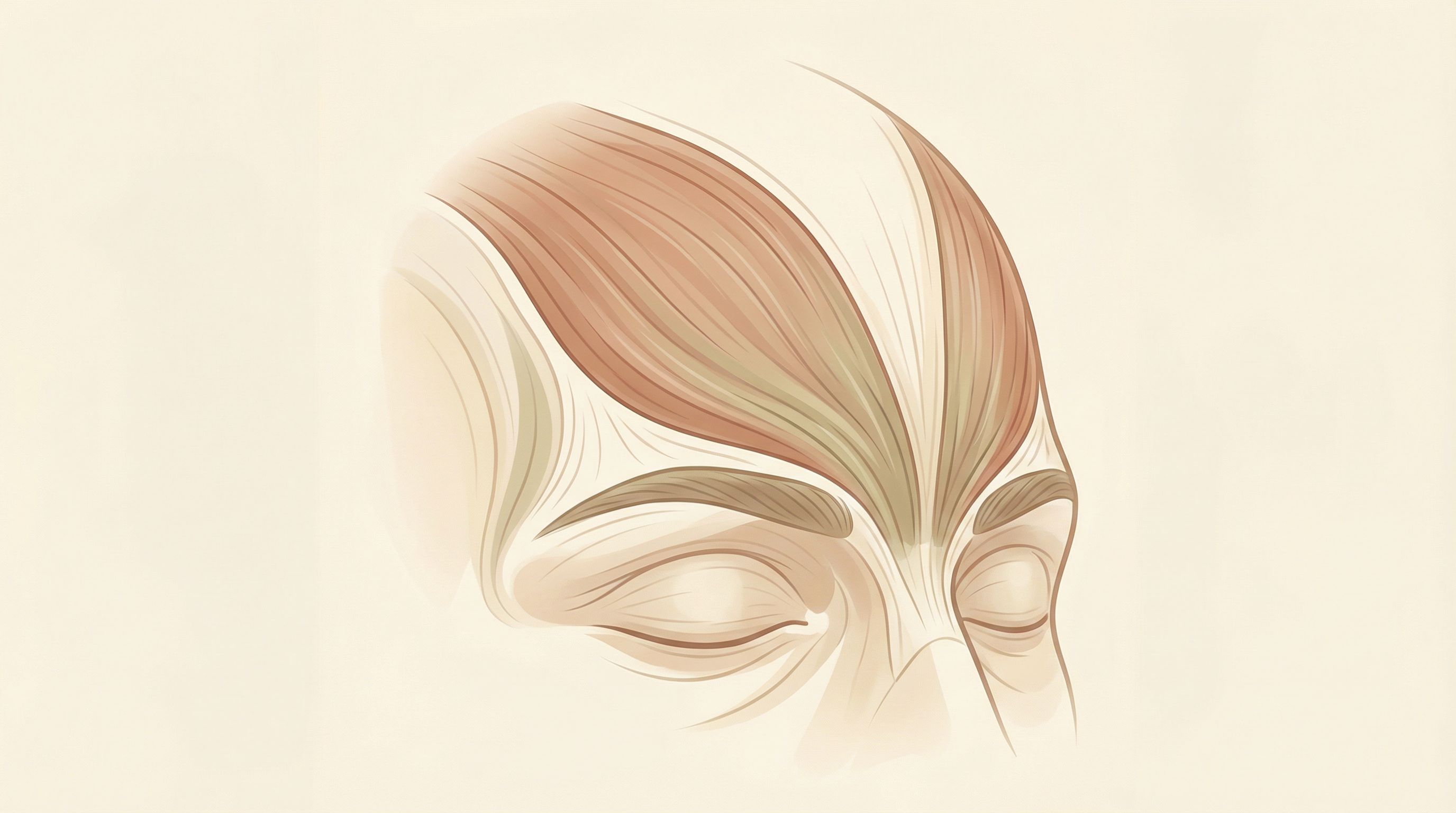
Your forehead is a balancing act. Two opposing muscle groups work together to position your eyebrows. When Botox disrupts this balance, your brows can drop.
The frontalis muscle runs across your forehead. It's the one that lifts your eyebrows and creates those horizontal forehead lines. When you look surprised or raise your brows, that's your frontalis working.
Below your brows sit the depressor muscles. These pull your eyebrows down. The corrugator (the one that creates 11 lines) and the orbicularis oculi (around your eyes) both have depressor functions.
Here's what happens. When your frontalis gets too much Botox, it can't lift your brows effectively anymore. But the depressor muscles underneath? They're still working fine. Maybe even working overtime. The result is brows that sag downward because nothing is pulling them up.
Think of it like a tug-of-war. If one team suddenly lets go of the rope, the other team falls backward. Your depressor muscles are winning a fight they shouldn't be winning.
The different types of brow heaviness
Not all heavy brows are created equal. Understanding which type you have helps determine the best solution.
Full forehead heaviness
This happens when too much Botox is placed across the entire frontalis muscle. Your whole forehead feels frozen. Both brows droop evenly. You might feel like you're wearing a helmet made of your own skin.
This type often occurs when providers use a "blanket" approach to the forehead, treating it uniformly rather than strategically. The forehead Botox technique matters enormously.
Lateral brow drop
The outer portions of your brows droop while the inner parts stay relatively normal. This creates a sad or tired appearance. Your eyes might look smaller because the tail of your brow is sitting lower than usual.
Lateral drop often happens when the outer forehead gets too much Botox or when the lateral frontalis fibers are particularly affected.
Medial brow heaviness
The inner portions of your brows feel heavy while the outer parts are fine. This can create a slightly angry or intense look. It's less common than lateral drop but does happen.
Asymmetric heaviness
One brow drops more than the other. This is especially frustrating because the asymmetry is hard to hide. It often results from uneven Botox distribution or from natural muscle strength differences that the injector didn't account for.
How long does heavy brow last?
The short answer: it depends on how much Botox was used and where it was placed.
Most cases of brow heaviness improve significantly within two to four weeks. The Botox starts to wear off slightly, allowing some frontalis function to return. This partial recovery is often enough to restore a more natural brow position.
Full resolution typically occurs as the Botox wears off completely, which takes three to four months. But most people see meaningful improvement well before then.
Some factors affect recovery time:
Dose matters. Higher doses in the forehead mean longer-lasting heaviness. If your provider used 20+ units across your frontalis, expect it to take longer to resolve than if they used 10 units.
Placement matters. Botox placed too low on the forehead (close to the brows) tends to cause more heaviness and takes longer to improve than Botox placed higher up.
Your anatomy matters. People with naturally low brows or weak frontalis muscles may experience heaviness longer than those with strong brow elevators.
The results timeline for side effects follows the same pattern as the cosmetic effects. As one fades, so does the other.
What you can do right now
Sitting around waiting for three months isn't your only option. Several strategies can help improve heavy brows faster.
Strategic additional Botox
This sounds counterintuitive. You got too much Botox, so the solution is more Botox?
Sometimes, yes. If your frontalis is over-relaxed but your depressor muscles are untouched, adding small amounts of Botox to the depressors can restore balance.
A few units in the crow's feet area can weaken the lateral orbicularis, allowing the brow to lift slightly. Treating the corrugator more aggressively can reduce its pulling-down effect.
This approach requires a skilled injector who understands facial anatomy. It's not about adding more product everywhere. It's about strategic rebalancing.
The brow lift technique
Some providers can inject small amounts of Botox just above the lateral brow to create a brow lift effect. This targets specific fibers that pull the brow down while sparing the ones that lift it.
If your heaviness is primarily lateral, this technique can provide meaningful improvement. It won't undo over-treatment of the central forehead, but it can help with the outer brows.
Waiting it out strategically
If additional Botox isn't an option or doesn't appeal to you, time is your friend. But you can make the waiting period more comfortable.
Avoid manipulating your brows. Don't constantly raise them trying to "exercise" the muscle back to life. This can actually make the Botox spread more or cause headaches from muscle strain.
Use makeup strategically. A slightly higher brow pencil line and lifted eyeshadow placement can create the illusion of higher brows while you wait for recovery.
Consider your hairstyle. Bangs or forward-facing layers can help camouflage heavy brows during the recovery period.
Why this happened in the first place
Understanding the cause helps prevent recurrence. Several factors contribute to heavy brows after Botox.
Too many units in the forehead
This is the most common cause. Providers sometimes use more Botox than necessary in the frontalis, especially if the patient has strong forehead lines and wants them completely frozen.
The problem? Complete freezing of the forehead often means complete loss of brow elevation. Most people need some frontalis function to maintain natural brow position.
The dosage guide recommends conservative forehead dosing, especially for first-time patients.
Placement too low on the forehead
Botox placed within two centimeters of the brow tends to affect the brow-lifting fibers most dramatically. Higher placement preserves more lift while still addressing forehead lines.
Some providers inject too low, either from habit or because that's where the patient's lines are deepest. But treating those low lines aggressively almost always causes some brow heaviness.
Not accounting for your anatomy
Everyone's face is different. Some people have naturally high brows with strong frontalis muscles. They can handle more forehead Botox without issue.
Others have naturally low brows, weak frontalis muscles, or hooded eyes that make them more susceptible to heaviness. These patients need gentler forehead treatment.
A skilled provider assesses your anatomy before injecting. They should be looking at your brow position, your frontalis strength, and your overall facial structure.
Treating the forehead without the frown
Here's a technical point that matters. The corrugator and procerus (the 11 lines muscles) pull the brows down. When they're active and the frontalis is relaxed, the brows drop.
Treating only the forehead while leaving the frown muscles untreated creates this exact imbalance. Most experienced providers treat both areas together to maintain balance.
If you asked for "just the forehead" and declined frown treatment, that may have contributed to your heaviness.
Preventing heavy brows next time

Once you've experienced heavy brows, you definitely don't want a repeat performance. Here's how to reduce your risk for future treatments.
Start conservative
For your next treatment, ask for fewer units in your forehead. You can always add more at a two-week follow-up if needed. You can't take away units once they're in.
A good starting point for the forehead is 10-15 units for women and 15-20 units for men. Some people need less. Very few need more.
Request higher placement
Ask your provider to stay higher on your forehead, at least two finger-widths above your brows. This reduces the risk of affecting the brow-elevating fibers while still addressing forehead lines.
You might have some residual lines at the lowest part of your forehead. That's OK. It's better than heavy brows.
Treat the frown lines too
If you're getting forehead Botox, seriously consider treating your 11 lines at the same time. The balance between these muscle groups matters.
Treating both areas together costs more upfront but prevents the imbalance that causes brow heaviness.
Find an experienced provider
This is the most important prevention strategy. Skilled injectors understand facial anatomy and know how to customize treatment for each patient's needs.
Ask your provider about their approach to preventing brow heaviness. If they seem unfamiliar with the concept or dismiss your concerns, consider finding someone else.
The who can give Botox guide explains the different types of providers and their training levels.
Communicate your concerns
Tell your provider about your previous experience with heavy brows. Show them photos if you have them. A good injector will adjust their technique based on your history.
Don't be shy about this. It's your face, and you're paying for the treatment. Your provider should want to know about past issues so they can avoid repeating them.
When to call your provider
Most brow heaviness resolves on its own. But certain situations warrant a call to your provider.
Severe drooping. If your brows are so low that they're affecting your vision or making it difficult to keep your eyes open, contact your provider. This level of ptosis may need intervention.
Asymmetric ptosis. If one brow is dramatically lower than the other and it's bothering you, a touch-up with additional Botox might help restore balance.
No improvement after four weeks. Most heaviness improves somewhat within a month. If yours hasn't budged, check in with your provider to discuss options.
Accompanying symptoms. Headaches, eye strain, or difficulty with vision aren't typical. These symptoms deserve medical attention.
Your provider should offer a follow-up appointment at no charge if you're experiencing significant side effects. Most reputable practices stand behind their work and want to help resolve issues.
The connection to ptosis
Brow heaviness is related to but different from true eyelid ptosis. Understanding the distinction matters.
Brow ptosis is what we've been discussing. The brow drops because the frontalis muscle is over-relaxed. The eyelid itself is fine, but the low brow pushes it down.
Eyelid ptosis is when the actual eyelid droops because Botox has affected the levator muscle that opens the eye. This is more serious and typically requires different treatment.
Both can occur together, and both result from Botox migration or over-treatment. But brow ptosis is more common and generally easier to manage.
If your eyelid itself is drooping (not just pushed down by your brow), that's true ptosis. Prescription eye drops like apraclonidine can help temporarily lift a droopy lid. Ask your provider if this might help your situation.
The side effects guide covers both types of ptosis in more detail.
Adjusting expectations
Here's something worth acknowledging: some forehead movement trade-off is normal with Botox.
If you want your forehead lines completely erased, your brows will be somewhat less mobile. That's just how the anatomy works. The muscle that creates the lines is the same muscle that lifts your brows.
The goal is finding the right balance. Enough Botox to significantly reduce lines without so much that your brows are immobile or heavy.
Most people can achieve about 70-80% improvement in forehead lines while maintaining natural brow position and movement. Chasing 100% elimination usually causes problems.
Having realistic expectations going in helps you communicate better with your provider about what you actually want. The natural-looking Botox guide discusses finding this balance.
Heavy brows in specific situations
Certain patient profiles face higher risk of brow heaviness. Knowing your risk factors helps you and your provider plan appropriately.
People with hooded eyes
If you already have hooded eyes, you're more susceptible to brow heaviness looking severe. There's less room for error because any brow drop immediately affects your eye appearance.
Patients with hooded eyes should receive conservative forehead treatment, often focusing on higher placement and lower doses.
People with naturally low brows
Some faces just have lower brow positions. This can be beautiful and striking, but it means less tolerance for frontalis relaxation.
If your brows naturally sit at or below your orbital rim, extensive forehead Botox will likely cause noticeable heaviness.
Older patients
With age, the frontalis often works harder to compensate for skin laxity and brow descent. Over-relaxing this compensating muscle can cause dramatic heaviness.
Botox in your 50s often requires gentler forehead treatment than in younger patients.
First-time patients
Your provider doesn't know how you'll respond until you've had treatment. First-timers should always receive conservative dosing with follow-up available for adjustments.
The botox for beginners guide recommends this approach for all new patients.
The silver lining

Experiencing heavy brows, while frustrating, teaches you something valuable about your anatomy and tolerance for Botox.
Now you know you're sensitive to forehead treatment. This information helps you and future providers customize your approach. Many people who've had this experience actually get better long-term results because they've learned what doesn't work for them.
You also now understand the importance of provider selection and communication. These lessons serve you well for any future cosmetic treatments.
And remember: this is temporary. In a few months, your face will be back to normal. You can then decide whether to try Botox again with a modified approach or explore other options.
Alternative approaches for forehead lines
If heavy brows have made you wary of forehead Botox, other options exist for treating forehead lines.
Microneedling stimulates collagen production and can soften lines over time. It doesn't carry the risk of brow heaviness because it doesn't affect muscle function.
Topical retinoids improve skin texture and reduce fine lines with consistent use. Results take longer but have no risk of changing your brow position.
Chemical peels can improve surface-level forehead lines. They work on skin quality rather than muscle activity.
Dermal fillers can be placed strategically to soften deep forehead lines. This approach is less common than Botox but avoids muscle-related side effects.
The botox vs fillers comparison discusses when each approach makes sense.
These alternatives won't give you the same smooth result as Botox, but they also won't give you heavy brows. For some people, that trade-off is worth it.
Working with your provider going forward
How your provider handles this situation tells you a lot about whether they deserve your future business.
A good provider:
- Takes your concerns seriously
- Explains what happened and why
- Offers solutions or adjustments
- Provides follow-up at no additional charge
- Adjusts their approach for your next treatment
A problematic provider:
- Dismisses your concerns
- Blames you for the outcome
- Refuses to see you for follow-up
- Wants to charge for correction
- Makes no plan for preventing recurrence
UseBotox provides resources to help you find qualified providers and understand what good care looks like. The preparation guide includes questions to ask before treatment.
The takeaway
Heavy brows after Botox happens. It's frustrating, but it's not permanent, and it's largely preventable with the right approach.
The key points to remember:
Your frontalis muscle lifts your brows. Too much Botox there means your brows drop.
Most heaviness improves within two to four weeks and resolves completely by three to four months.
Strategic additional Botox to the brow depressors can sometimes help restore balance.
Prevention involves conservative dosing, higher placement, treating opposing muscle groups, and working with experienced providers.
Communication with your provider before, during, and after treatment is essential.
You now understand more about forehead anatomy and Botox dynamics than most patients ever learn. Use that knowledge to get better results going forward.
Frequently asked questions
How long does it take for heavy brows to go away?
Most improvement happens within two to four weeks. Full resolution typically occurs as Botox wears off at three to four months. Higher doses and lower placement generally mean longer recovery times.
Can more Botox fix heavy brows?
Sometimes yes. Small amounts of Botox added to the brow depressor muscles (crow's feet area, corrugator) can restore balance. This requires a skilled injector who understands the anatomy involved.
Will heavy brows happen every time I get Botox?
Not necessarily. With proper technique, conservative dosing, and good communication with your provider, you can often avoid recurrence. Learning from this experience actually helps future treatments.
Should I avoid forehead Botox completely?
Not necessarily. Many people who've experienced heavy brows get great results with modified approaches: fewer units, higher placement, and treating opposing muscles for balance.
Can I do anything at home to help?
Time is your main ally. Avoid manipulating your brows. Use makeup to create the illusion of lift. Consider bangs or hairstyle changes to camouflage during recovery. Don't try to "exercise" the muscle back to function.
When should I call my provider about heavy brows?
Call if the heaviness is affecting your vision, if you have severe asymmetry, if there's no improvement after four weeks, or if you're experiencing headaches or eye strain.
Related guides
Sources
In case I don't see you, good afternoon, good evening, and good night. May your brows lift naturally, your recovery be swift, and your next treatment be perfectly balanced. Explore UseBotox for guides and tools to plan your Botox treatments.