How Many Units of Botox for Lip Flip: Complete Dosing Guide
Learn exactly how many Botox units you need for a lip flip. Covers typical doses (4-10 units), factors affecting your amount, and what to expect.

The Botox lip flip has become one of the most requested subtle enhancements in aesthetic medicine. And the question everyone asks first? How many units do I actually need? The answer matters more than you might think. Too few units and you won't see results. Too many and you might struggle with drinking through a straw for weeks. Most patients need between 4 and 10 units for a lip flip, with the sweet spot landing around 4 to 6 units for first-timers. But that number isn't random. It depends on your lip anatomy, your muscle strength, the look you want, and your injector's technique. This guide breaks down everything about lip flip dosing, from the science behind why these units work to what happens when you get the dose wrong. You'll learn how providers determine your ideal amount, what factors push the number higher or lower, and how to communicate your goals for the best possible outcome. UseBotox created this resource to help you walk into your appointment informed and confident.
Understanding the lip flip mechanism
Before talking units, you need to understand what a lip flip actually does. It's not filler. It doesn't add volume to your lips. Instead, Botox injections relax the orbicularis oris muscle, the circular muscle that wraps around your mouth like a drawstring.
When this muscle relaxes, your upper lip gently rolls outward. Just slightly. The result? More of your lip's pink tissue becomes visible when you smile or rest your face. Your lip looks fuller without actually being fuller.
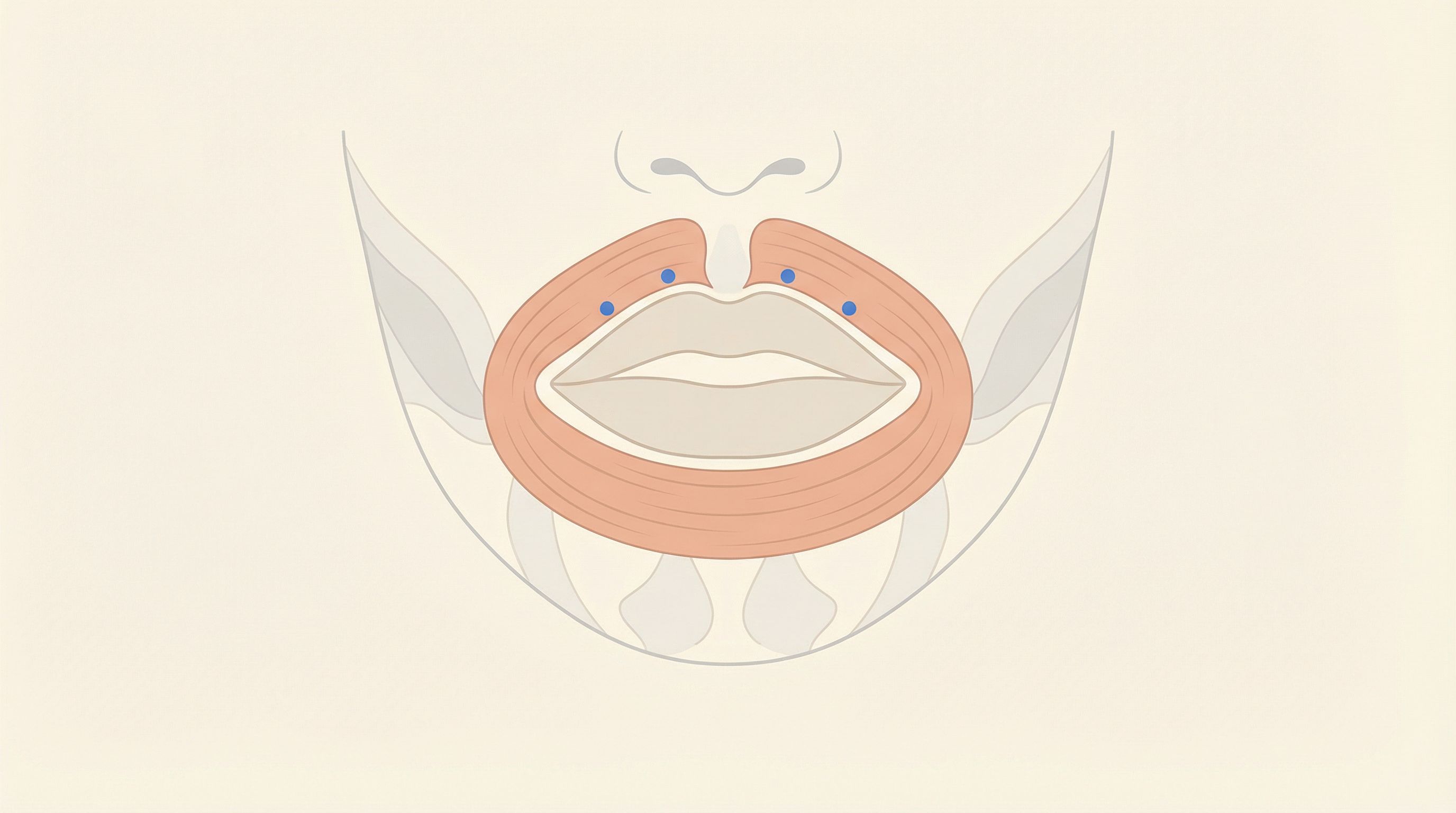
This matters for dosing because you're working with a small, precise area. The orbicularis oris controls essential functions like speaking, eating, and drinking. Injection placement must be exact. The dose must be conservative. Get it wrong and basic activities become genuinely difficult.
Why lip flip units stay low
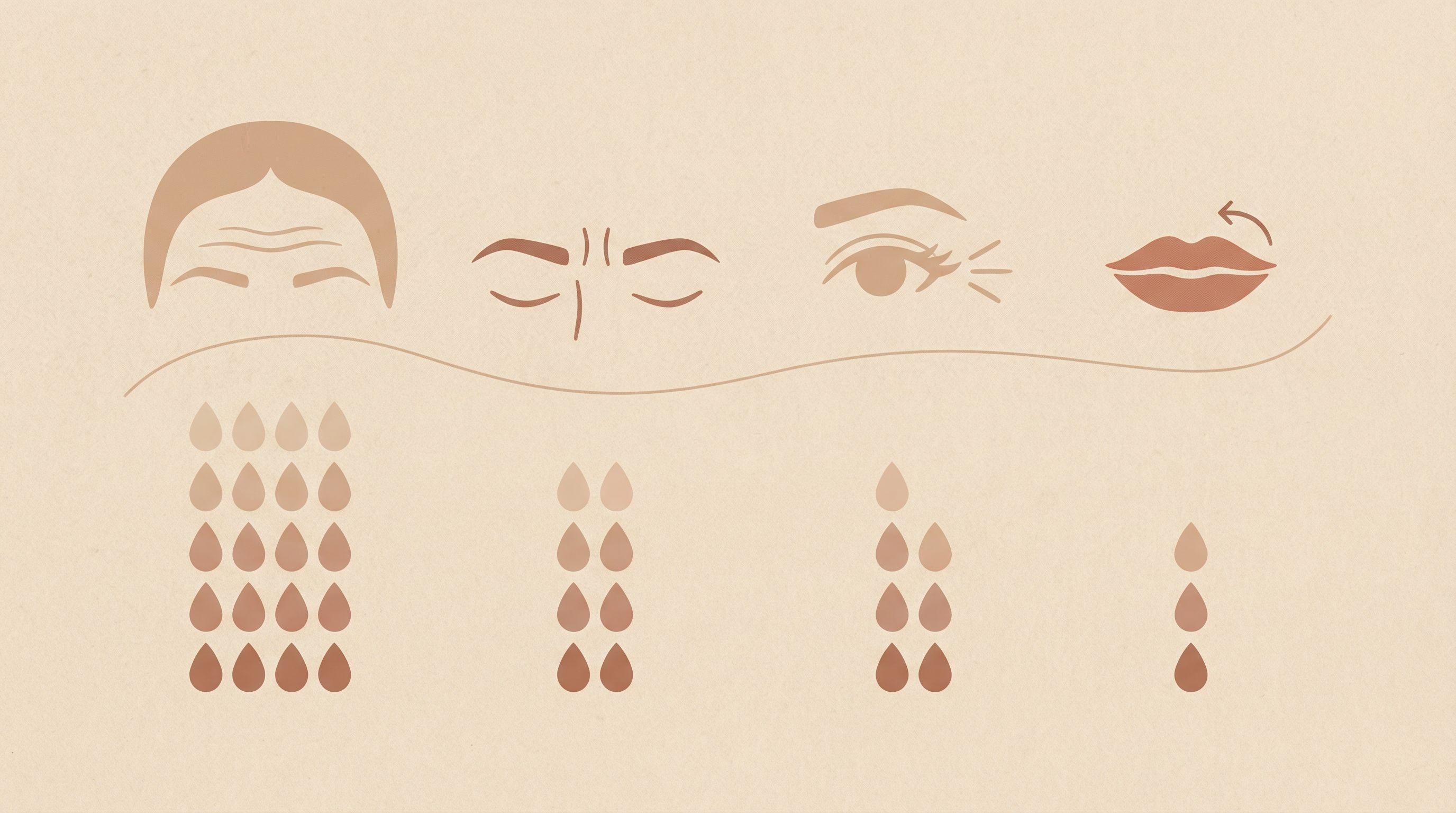
Compare lip flip dosing to other treatment areas. Forehead lines might need 10 to 30 units. Frown lines typically require 15 to 25 units. Masseter treatment for jaw slimming can use 40 to 60 units per side.
The lip flip? Usually 4 to 10 units total.
Why so few? Three reasons. First, the orbicularis oris is a relatively thin muscle. It doesn't need much product to relax. Second, you want subtle relaxation, not paralysis. You still need to purse your lips, whistle, drink from cups. Third, the margin for error is tiny. A few extra units in your forehead might make your brow feel heavy. A few extra units around your lips could affect your speech.
The anatomy factor
Everyone's lip anatomy differs. Some people have naturally thin upper lips with minimal pink tissue showing. Others have fuller lips but a strong muscle that pulls the lip inward when smiling. Your specific anatomy determines how you'll respond to treatment and influences your ideal dose.
Providers assess several things during your consultation. They look at your lip proportions at rest and while smiling. They evaluate how much your upper lip disappears when you grin. They check the strength and thickness of your orbicularis oris. They consider your facial symmetry and any existing asymmetries to address.
All of this shapes the treatment plan. And yes, it affects how many units you need.
Standard lip flip dosing breakdown
Let's get specific about numbers. These ranges represent typical dosing protocols used by experienced injectors. Your personal dose might fall anywhere within them based on individual factors.
First-time lip flip patients
If you've never had a lip flip before, expect a conservative approach. Most providers start with 4 to 6 units. This allows them to see how you respond before committing to higher doses.
Why start low? Because you can always add more at a follow-up, but you can't take Botox out once it's injected. Starting conservatively protects you from overcorrection and functional issues. It also helps your provider understand your unique response to the treatment.
The units typically distribute across 2 to 4 injection points along the upper lip border. Some injectors place them directly into the vermillion border. Others inject just above it into the "Cupid's bow" area. Technique varies, but total dosing stays similar.
Experienced patients with established tolerance
Patients who've had multiple lip flips often need slightly more product over time. This isn't because Botox stops working. It's because your provider better understands your anatomy and can dial in the perfect dose.
Experienced patients might receive 6 to 10 units. Some with particularly strong orbicularis oris muscles or those seeking more dramatic results push toward the higher end. But exceeding 10 units for a lip flip is rare and carries increased risk of functional side effects.
Combination treatments
Many patients combine their lip flip with other treatments. Vertical lip lines, sometimes called smoker's lines or lipstick lines, respond well to Botox. Gummy smile correction uses Botox to relax muscles that elevate the upper lip too high.
When combining treatments, total units around the mouth increase. A lip flip (4-6 units) plus vertical lip lines (2-4 units) plus gummy smile correction (2-4 units) might total 8-14 units around the perioral area. Your provider plans these combinations carefully to avoid over-relaxing the region.
Factors that affect your personal dosing
That 4-10 unit range exists because individuals vary dramatically. Several factors push your ideal dose higher or lower within that range.
Muscle strength and activity
Strong orbicularis oris muscles require more product to relax. How do you know if your muscle is strong? Think about your facial expressions. Do you purse your lips frequently? Do you use a lot of mouth movement when speaking? Do you play wind instruments or sing professionally?
Active, strong muscles typically need doses at the higher end of the range. More sedentary lip muscles respond well to lower doses.
Desired outcome intensity
What result do you want? A barely-there enhancement that nobody notices? Or a more obvious flip that clearly shows more lip?
Subtle results need fewer units. More noticeable results need more. Your provider should ask about your goals during your consultation. Be specific. Bring reference photos if helpful. Clear communication prevents disappointment.
Previous Botox experience
Your history with neuromodulators matters. First-time Botox patients often respond more dramatically to lower doses. Your muscles have never experienced this relaxation before. They tend to respond readily.
Long-term Botox users sometimes need slightly higher doses across all treatment areas. This isn't resistance exactly. It's more that your provider learns to optimize your dose over time, and sometimes that means adjusting upward.
Metabolism and lifestyle factors
Some people metabolize Botox faster than others. High-intensity athletes, people with fast metabolisms, and those who exercise frequently sometimes find their results fade sooner. These patients might benefit from slightly higher initial doses, though this remains somewhat controversial among providers.
Alcohol consumption around treatment time doesn't directly affect dosing, but it can increase bruising risk. Bruising doesn't change how many units you need, but it affects your experience and recovery.
Anatomical variations
Lip anatomy varies significantly. People with naturally thinner lips sometimes see more dramatic results from the same dose compared to those with fuller lips. Upper lip length matters too. A longer distance between nose and lip border might mean slightly different injection placement, though unit counts typically stay similar.
Asymmetries require attention. If one side of your lip is slightly smaller or your smile pulls unevenly, your provider might place units asymmetrically to create balance. The total unit count remains similar, but distribution changes.
The injection process explained
Understanding how providers actually inject lip flips helps you appreciate why dosing precision matters so much.
Injection points and placement
Most lip flip protocols use 2 to 6 injection points across the upper lip. The most common approach places injections at three points: one in the center at Cupid's bow and one on each side.
Some providers use four points for more even distribution. Others prefer two central points for very conservative treatment. The number of injection sites doesn't necessarily correlate with total units. You might receive 4 units across 2 points or 4 units across 4 points depending on technique preference.
Depth matters critically. Injections go into the muscle, not too superficial and not too deep. Superficial placement risks visible bumps. Deep placement might miss the target muscle entirely. Experienced injectors understand exactly where to place product for optimal results.
The actual experience
Does it hurt? The lip area is sensitive, no question. Most patients describe the sensation as a quick pinch or sting that lasts seconds. The entire injection process typically takes under five minutes once you're prepped.
Some providers apply topical numbing cream before injection. Others use ice to reduce discomfort. Many patients find the procedure tolerable without any numbing at all. Your comfort level and pain tolerance guide these decisions.
You'll receive very small amounts of product at each injection point. With only 4-6 units total and multiple injection sites, each point receives roughly 1-2 units. These are tiny quantities, which means tiny needles and quick injections.
Immediately after treatment
Right after your lip flip, you might notice small bumps at injection sites. These typically resolve within 15-30 minutes. Slight swelling or redness is normal and fades quickly.
Your provider will give you aftercare instructions. Don't rub or massage the area. Avoid lying down for a few hours. Skip intense exercise for 24 hours. These precautions prevent product from migrating to unintended areas.
Results timeline for lip flips
Patience matters with lip flips. Unlike filler, which shows immediately, Botox results develop gradually over days.

Days 1-3: The waiting period
Don't expect to see much immediately. Botox needs time to bind to nerve receptors and block muscle contraction signals. During the first few days, you might notice nothing at all. This is completely normal.
Some patients feel slight tightness around the lips as the product begins working. Others notice no sensation whatsoever. Neither response indicates anything about your final results.
Days 4-7: Initial effects appear
Around day four or five, you'll start seeing changes. Your upper lip begins relaxing outward slightly. When you smile, less lip rolls inward. You might notice a subtle pout developing at rest.
This is when most patients get excited. The flip is happening. But remember, full results haven't developed yet. What you see at day five isn't your final outcome.
Days 10-14: Full results
Peak results typically appear around day 14. By this point, maximum muscle relaxation has occurred. Your lip flip looks its best. This is when your provider wants you to assess results and decide if adjustments are needed.
Take photos at this stage. Compare them to your before photos. Evaluate if you achieved your desired outcome. If you want more flip, you can add units. If you're happy, you now know your ideal dose for future treatments.
Maintenance and longevity
Lip flips don't last forever. Most patients enjoy results for 8 to 12 weeks. Some find effects fading around 6 weeks. Others maintain results for 3 months. Your metabolism, activity level, and individual response influence duration.
Because lip flip effects are subtle and wear off relatively quickly, many patients choose to maintain results with regular treatments. The frequency calculator can help you plan a maintenance schedule. Most lip flip patients return every 2-3 months if they want continuous results.
Real-world dosing scenarios
Theory only takes you so far. Let's walk through specific scenarios showing how dosing decisions play out in actual treatment situations. These examples illustrate how providers adapt unit counts to individual circumstances.
Scenario one: The subtle enhancer
Sarah, 28, has never had any cosmetic treatment. She wants her upper lip to show slightly more when smiling for her engagement photos. Her natural lips are average in fullness, and her orbicularis oris isn't particularly strong.
Her provider recommends starting with 4 units placed at three points along the upper lip border. At her two-week follow-up, Sarah notices a subtle improvement. Her lip rolls out just enough to show more pink tissue in photos. She's happy. For her, 4 units is the sweet spot.
This scenario represents the most common outcome. Conservative dosing achieves the desired result without risk of overcorrection. Sarah now knows her maintenance dose for future treatments.
Scenario two: The stronger muscle
Maria, 35, plays clarinet professionally. Years of instrument playing have developed strong orbicularis oris muscles. She wants a lip flip but mentions she's heard the treatment might not work well for musicians.
Her provider acknowledges the concern. Strong muscles typically need more product. They start with 6 units instead of the usual 4. They also discuss timing, recommending Maria avoid scheduling treatment right before important performances.
At two weeks, Maria sees results but wants slightly more flip. Her provider adds 2 units, bringing her total to 8. This becomes her standard dose. She schedules treatments during performance breaks and maintains good results with minimal functional impact on her playing.
Scenario three: The combination approach
Jennifer, 45, wants fuller-looking lips overall. She's interested in a lip flip but also thinks she might need filler. During consultation, her provider examines her lips and notes moderate age-related volume loss plus the inward-rolling pattern when smiling.
The recommendation: 6 units of Botox for the flip plus 0.5ml of hyaluronic acid filler for volume. The treatments complement each other. The flip shows more of her natural lip while the filler adds fullness she's lost over time. Total units for the Botox portion remain in the normal range, but overall enhancement exceeds what either treatment achieves alone.
Scenario four: The previous overcorrection
David, 40, had a lip flip elsewhere that went wrong. His previous provider used 12 units, leaving him struggling to drink properly for two months. He wants to try again but is understandably nervous.
His new provider takes a ultra-conservative approach: just 3 units to start. At two weeks, David notices minimal change. He returns for 2 additional units. At 5 units total, he achieves the look he wanted originally without any functional problems. His previous negative experience resulted from excessive dosing, not the treatment itself.
What these scenarios teach us
Each example demonstrates the same principle: individual factors drive dosing decisions. There's no universal "right" number of units. Your ideal dose depends on your anatomy, your goals, your history, and your provider's assessment of all these factors together.
The safest approach remains starting conservative and adjusting upward. Every scenario where things went well involved providers who respected this principle. The scenario involving problems stemmed from skipping this step.
Expert tips from experienced injectors
Providers who perform hundreds of lip flips annually develop insights that textbooks don't cover. Here's practical wisdom gathered from experienced aesthetic professionals.
Communication matters more than you think
Bring reference photos to your appointment. Abstract descriptions like "I want fuller lips" mean different things to different people. Photos show exactly what you envision. Even if your provider suggests modifications, visual references start productive conversations.
Be honest about past experiences. If you've had Botox elsewhere that didn't work, share that. If you metabolize products quickly, mention it. Information helps providers calibrate your treatment accurately.
Timing considerations
Schedule lip flips strategically. You need two weeks for full results to develop. If you have an important event, book treatment at least 14 days before. This also allows time for touch-ups if needed.
Avoid scheduling right before dental work. Open-mouth procedures soon after a lip flip can feel uncomfortable or affect product distribution. Wait at least a week if possible.
The touch-up strategy
Many experienced patients use a two-appointment approach for optimal results. They receive conservative initial dosing, evaluate results at two weeks, then add units if desired. This takes longer but virtually eliminates overcorrection risk.
If your provider offers discounted or complimentary touch-ups within a certain window, take advantage. This policy exists because good providers know that perfect dosing often requires refinement.
Managing expectations realistically
A lip flip won't give you dramatically different lips. It's subtle enhancement that reveals more of what you naturally have. Patients expecting transformation are typically disappointed. Patients expecting refinement are typically thrilled.
Results vary depending on your starting point. People with naturally fuller lips see more dramatic flips because there's more tissue to reveal. Those with thinner lips see subtle improvement that might be apparent mainly in photos or to themselves in mirrors.

Maintenance optimization
Regular treatments sometimes require fewer units over time as muscles adapt to staying relaxed. Some long-term patients find they can maintain results with 3-4 units after initially needing 6. Others maintain consistent doses indefinitely. Track your history to identify patterns.
Consider scheduling lip flip treatments alongside other Botox appointments. The frequency calculator helps coordinate timing. Combining treatments in single sessions often reduces total costs compared to separate visits.
Common mistakes and how to avoid them
Even informed patients make errors that affect their lip flip outcomes. Recognizing common pitfalls helps you navigate treatment more successfully.
Mistake: Choosing providers based solely on price
Lip flips are already affordable. Seeking the absolute cheapest option risks receiving diluted product, inexperienced injection technique, or both. The difference between a $75 treatment and a $125 treatment rarely justifies choosing based on cost alone.
What matters more: provider experience with this specific treatment, their approach to dosing, and their availability for follow-up adjustments. Pay slightly more for quality if necessary.
Mistake: Requesting excessive units initially
Some patients arrive wanting 10 units because they read online that more is better. More is definitely not better for lip flips. Experienced providers push back against unreasonable requests because they understand the functional consequences.
Trust professional recommendations. If your provider suggests starting with 4-6 units, they're protecting you from problems. You can always add more. You can never remove what's already injected.
Mistake: Judging results too early
Evaluating your lip flip at day 3 or 4 leads to inaccurate conclusions. Full results take two weeks. Patients who panic early and request additional units before adequate time passes risk overcorrection.
Wait the full 14 days. Take before photos and compare honestly. Most underwhelming early results develop into satisfying final outcomes given proper time.
Mistake: Neglecting aftercare
Aftercare instructions exist for good reasons. Rubbing the treated area can spread product to unintended muscles. Lying down too soon might affect distribution. Intense exercise increases circulation that could impact results.
Follow your provider's aftercare guidance carefully. The restrictions are temporary and minor. Ignoring them risks compromising your results.
Mistake: Not communicating concerns
If something seems wrong during treatment, speak up. If post-treatment sensations worry you, contact your provider. Most concerns have simple explanations. Staying silent about problems delays resolution.
Good providers welcome questions. They'd rather address concerns directly than have patients suffer in unnecessary worry or post negative reviews based on misunderstandings.
Long-term lip flip maintenance
Many patients fall in love with their lip flip results and want to maintain them indefinitely. Understanding long-term maintenance helps you plan appropriately.
Treatment frequency
Lip flips typically last 8-12 weeks. To maintain continuous results, most patients schedule treatments every 2-3 months. Some find effects lasting longer and extend intervals. Others metabolize Botox quickly and return more frequently.
Track your individual pattern. Note when you first notice effects fading. Schedule next appointments proactively rather than waiting until results disappear completely. Maintaining some muscle relaxation may help prevent the "yo-yo" effect of complete relaxation followed by full return of muscle activity.
Dosing consistency versus adjustment
Your maintenance dose might differ from your initial treatment dose. First treatments often use conservative amounts while providers learn your response. Subsequent treatments can be optimized based on experience.
Some patients maintain the same dose for years. Others require periodic adjustments. Factors like weight changes, aging, facial muscle use patterns, and life circumstances can all influence dosing needs over time.
Cost planning for ongoing treatment
Budget for 4-6 lip flip treatments annually if maintaining continuous results. At typical pricing, this represents $400-1200 per year depending on your area and provider. The cost calculator helps estimate your specific expenses.
Some practices offer loyalty programs or membership models reducing per-treatment costs for regular patients. Ask about these options if you plan ongoing maintenance. Committing to a single provider often unlocks better pricing.
When to consider alternatives
Long-term, some patients transition from lip flips to other options. If you find yourself wanting increasingly dramatic results, filler might serve you better than ever-higher Botox doses. If you tire of frequent appointments, longer-lasting treatments might fit your lifestyle better.
Periodic reassessment keeps your treatment plan aligned with evolving goals. What worked at 30 might not be ideal at 40. What seemed perfect initially might eventually feel insufficient. Good providers help you navigate these transitions thoughtfully.
When lip flip dosing goes wrong
Let's talk about what happens with incorrect dosing. Understanding potential problems helps you appreciate why conservative dosing matters.
Too few units
If you don't receive enough units, you simply won't see results. Your muscle won't relax sufficiently. Your lip won't flip. This isn't dangerous, just disappointing.
The fix is straightforward. Return to your provider after two weeks and add more units. Most injectors prefer this approach over risking overcorrection. Starting low and adjusting upward protects you from functional problems.
Too many units
Excessive dosing creates real problems. Over-relaxed orbicularis oris muscles affect basic functions. You might struggle to drink from cups or through straws. Liquid might dribble from your lips. Pronunciation of certain sounds becomes difficult. Whistling becomes impossible.
These effects sound alarming, and they can be frustrating to experience. But here's the reassurance: they're temporary. Even overdosed Botox wears off. You'll regain normal function as the product metabolizes, typically within 6-8 weeks for over-treated areas.
This is why reputable providers stay conservative with lip flip dosing. The consequences of under-treatment are merely cosmetic. The consequences of over-treatment affect daily life.
Poor placement
Even with correct unit counts, poor injection placement causes problems. Product placed too far from the lip border might not create visible flip. Product placed too laterally might create asymmetry. Product injected too deep might not affect the target muscle at all.
This emphasizes why choosing a qualified injector matters so much. Technique determines outcomes as much as dosing does.
Lip flip versus lip filler: The dosing difference
Many patients confuse lip flips with lip filler. They're completely different treatments with completely different dosing measurements.
Botox lip flip dosing
Measured in units. Typical dose: 4-10 units. Product relaxes muscles. Results appear gradually. Effects last 8-12 weeks. Creates illusion of fuller lip without adding volume. Conservative, subtle enhancement.
Lip filler dosing
Measured in milliliters or syringes. Typical first treatment: 0.5-1ml. Product adds volume directly. Results appear immediately. Effects last 6-12 months depending on product. Actually increases lip size. Can be dramatic or subtle depending on amount.
Combining both treatments
Some patients want both a flip and added volume. These treatments combine well. You might receive 4-6 units of Botox for the flip plus 0.5ml of hyaluronic acid filler for volume. The Botox shows your existing lip tissue more prominently while the filler adds actual fullness.
Combination treatments require careful planning. Your provider must consider how both products interact and ensure natural-looking results. Total treatment costs more than either alone, but achieves outcomes neither can accomplish independently.
Cost considerations for lip flip units
Understanding dosing helps you anticipate costs. Botox pricing typically works in two ways: per unit or per area.
Per-unit pricing
Many providers charge per unit, typically $10-20 per unit depending on location and practice type. At these rates, a 4-unit lip flip costs $40-80. A 6-unit treatment runs $60-120. Even at the higher end of dosing, you're looking at $100-200.
This makes lip flips one of the most affordable Botox treatments available. Compare to full forehead treatment costing $200-600 or jaw slimming running $400-800. The lip flip's low unit requirement keeps costs accessible.
Per-area pricing
Some practices charge flat rates per treatment area regardless of units used. A lip flip might cost $150-300 as a set price. This simplifies billing but removes some transparency about actual product amounts.
Per-area pricing benefits patients who need higher unit counts within the typical range. If you need 10 units but pay a flat $200, you're getting good value compared to per-unit pricing. It disadvantages patients who need minimal units and would pay less under per-unit structures.
Combination treatment costs
If you're combining lip flip with other treatments during the same appointment, costs add up but you might receive package discounts. Treating multiple areas in one session often costs less per unit than multiple separate appointments.
Ask your provider about package pricing. Many offer discounts when treating several areas together. Your total cost depends on combined units needed, but you'll likely save compared to treating each area separately.
Choosing the right provider for lip flip treatment
Dosing decisions happen in the treatment room with your provider. Choosing the right injector determines whether you receive appropriate units and proper placement.
Qualifications to look for
Who can perform lip flips? Various professionals inject Botox legally, but experience levels vary dramatically. Look for board-certified dermatologists, plastic surgeons, or nurse practitioners with specialized aesthetic training.
Ask about specific lip flip experience. How many have they performed? What's their typical dosing protocol? How do they handle patients who want adjustments? Providers who regularly perform this treatment understand its nuances.
Consultation expectations
A good provider doesn't just inject and send you home. They conduct thorough consultations. They examine your lip anatomy. They ask about your goals. They explain their recommended dose and why. They discuss potential outcomes and limitations.
During consultation, the provider should evaluate your orbicularis oris strength, assess your natural lip proportions, note any asymmetries, and recommend a starting dose. If they suggest a specific number of units, ask why. Understanding their reasoning helps you make informed decisions.
Red flags to avoid
Be cautious of providers who don't discuss dosing at all. If someone says "I'll just inject until it looks right" without mentioning units, that's concerning. Proper technique requires planning.
Avoid extremely cheap offers that seem too good to be true. Quality Botox costs what it costs. Dramatically discounted treatments might use diluted product, which affects results and makes dosing unpredictable.
Watch out for pressure to add more treatments than you want. A lip flip appointment shouldn't become a full-face treatment session unless that's your goal. Good providers respect your stated intentions.
Lip flip for different patient types
Dosing considerations shift slightly depending on patient characteristics. Let's examine how different groups approach lip flip treatment.
Younger patients and preventative treatment
Younger patients in their twenties and early thirties often seek lip flips for subtle enhancement rather than correcting existing concerns. These patients typically need doses at the lower end of the range. Their muscles are strong but responsive. Results come easily.
First-time patients in this age group usually start with 4 units. Many find this sufficient and never need more. Some discover they prefer a more noticeable flip and increase to 6 units at subsequent treatments.
Patients in their forties and beyond
Patients in their forties and fifties sometimes seek lip flips to address age-related lip thinning. As we age, lips naturally lose volume and the upper lip can roll inward more noticeably. A lip flip helps counteract this.
Dosing for mature patients follows similar ranges but might trend slightly higher. Muscle patterns established over decades can be more resistant to relaxation. Starting at 4-6 units remains appropriate, but more patients in this group end up at 6-8 units for optimal results.
Male patients
Men seeking lip flips often want extremely subtle results. The goal typically isn't noticeable enhancement but rather preventing the upper lip from disappearing entirely when smiling. Male patients frequently prefer doses at the very low end, sometimes just 2-4 units for barely-there effects.
Male orbicularis oris muscles can be stronger than female counterparts, which might suggest higher doses. But male aesthetic preferences usually prioritize subtlety over impact, keeping unit counts conservative.
Alternative treatments and how they compare
The lip flip isn't your only option for lip enhancement. Understanding alternatives helps you decide if this treatment and its dosing approach fit your goals.
Lip filler alone
If you want actual volume increase, filler alone makes more sense than a lip flip. Filler adds substance. Flip just reveals more of what you have. Patients with very thin lips might not see dramatic results from a flip alone because there's limited tissue to reveal.
Filler involves different considerations entirely. You're measuring milliliters, not units. You're choosing hyaluronic acid formulations. Results are immediate and last longer. The decision between flip and filler depends on what you actually want to achieve.
Lip flip plus filler
Many patients benefit from both treatments together. The flip shows your natural lip more prominently. The filler adds volume on top. Combined, they create enhancement that neither achieves alone.
If pursuing both, discuss with your provider how to sequence treatments. Some inject both in the same appointment. Others prefer staging treatments to assess each result independently. Combined dosing requires holistic planning.
Other neuromodulators
Botox isn't the only option for lip flips. Dysport, Xeomin, and other neuromodulators work similarly. Dosing conversions exist but aren't always straightforward. Dysport uses different unit measurements than Botox. Switching between products requires recalibrating doses.
If your provider typically uses a product other than Botox, ask about their specific dosing protocols. The mechanism remains similar, but unit numbers might look different on paper.
Frequently asked questions
Can I request a specific number of units for my lip flip?
Yes, you can discuss unit preferences with your provider. However, trust their expertise too. If you request 10 units but they recommend 4, ask why. They might see anatomical factors suggesting lower doses would achieve your goals safely. Good providers explain their reasoning and find compromises when patient preferences and clinical judgment differ.
Will I need the same number of units every time?
Not necessarily. Your first treatment might use conservative doses that increase at follow-up once your provider understands your response. Long-term, most patients settle into a consistent dose, but adjustments happen. Life changes like weight fluctuations, aging, or developing new facial movement patterns can shift your ideal units over time.
How do I know if I need more units after my lip flip?
Wait the full two weeks for results to develop before deciding. If at day 14 your lip hasn't flipped noticeably, you likely need more units. Schedule a follow-up with your provider to add product. Most practices don't charge full price for touch-up units within a short window after initial treatment.
Is there a maximum safe dose for lip flips?
Most providers cap lip flip dosing around 10 units. Beyond this, functional side effects become increasingly likely. If you feel you need more than 10 units for visible results, discuss alternative approaches with your provider. You might benefit more from filler, or a combination approach might achieve goals that high-dose Botox alone cannot.
Why do some providers charge differently for the same units?
Pricing reflects many factors beyond product cost. Provider experience, practice location, overhead costs, and market positioning all influence what you pay. A more expensive provider isn't automatically better, but extremely cheap treatment should raise questions. Focus on qualifications and results rather than finding the absolute lowest price.
Can lip flip units be adjusted if I don't like the results?
Adding more units is easy if you want more flip. Unfortunately, removing Botox isn't possible. If you receive too many units and experience functional issues, you must wait for effects to wear off naturally, typically 6-12 weeks. This is precisely why starting conservative makes sense for new patients.
Related guides
Sources
In case I don't see you, good afternoon, good evening, and good night. May your lip flip look natural, your units be perfectly calibrated, and your smile show exactly what you want it to show. Explore UseBotox for comprehensive guides, calculators, and resources to plan every aspect of your treatment.